- The paper demonstrates that LLMs can self-assess hallucination risk using internal neural activations, achieving up to 84.32% accuracy.
- It employs a probing estimator with an MLP architecture adapted from Llama to discern query familiarity, reaching 80.28% recognition of training data exposure.
- Experimental results across diverse NLG tasks highlight improved reliability and potential for integrating retrieval augmentation to mitigate hallucination errors.
LLM Internal States Reveal Hallucination Risk Faced With a Query
The paper "LLM Internal States Reveal Hallucination Risk Faced With a Query" (2407.03282) explores the inherent problem of hallucination in LLMs and proposes a methodology to estimate this risk prior to generating a response. This essay provides an in-depth analysis of the paper, focusing on its methodology, empirical findings, and implications for future AI research.
Introduction
LLMs, although powerful, often produce hallucinated content—plausible-sounding but unfaithful information. The paper investigates whether LLMs can predict their risk of hallucination based on internal states before generating responses. Through comprehensive analysis across diverse natural language generation (NLG) tasks and extensive datasets, the study identifies key neurons and activation layers contributing to the self-assessment of hallucination risk.
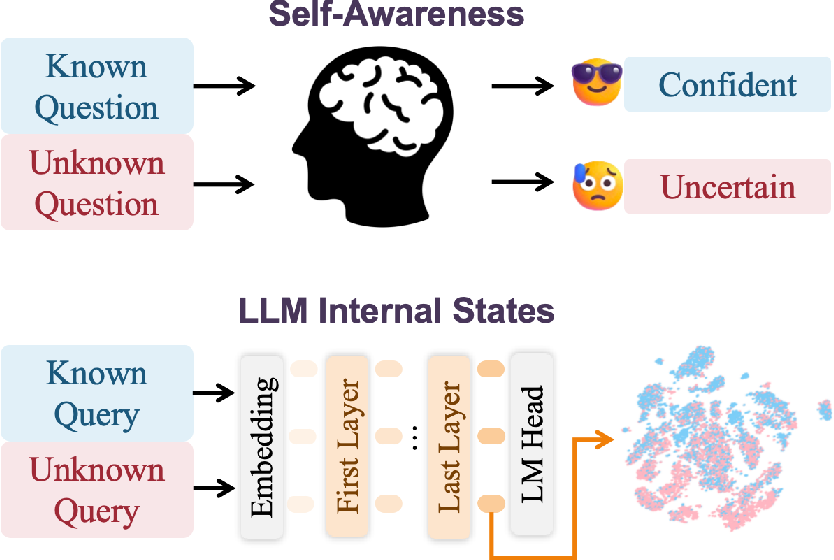
Figure 1: Humans have self-awareness and recognize uncertainties when confronted with unknown questions. LLM internal states reveal uncertainty even before responding.
Hallucination and Training Data
Hallucinations can emerge from data-related issues, such as unseen queries, or modeling-related factors like architectural limitations. The study explores how LLMs' internal states can determine whether a query was part of the training dataset, achieving a recognition accuracy of 80.28%. This insight suggests that specific neurons within LLMs are adept at discerning training exposure, which could mitigate hallucination in future applications.
Methodology
The approach capitalizes on a probing estimator to harness LLMs' internal states for hallucination risk estimation. By analyzing neurons responsive to hallucination perceptions (Figure 2), and employing a multilayer perceptron (MLP) architecture adapted from Llama's structure for estimation, the study achieves an average classification accuracy of 84.32%.
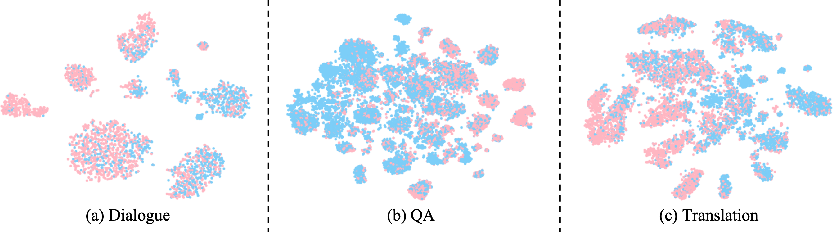
Figure 2: Visualization of the Neurons for Hallucination Perception in various NLG tasks.
This methodology effectively decouples the hallucination estimation process from the actual generation, offering a proactive approach for identifying high-risk situations that may require retrieval augmentation.
Experiments and Results
Experiments cover a broad spectrum of NLG tasks, showing the efficacy of the internal state-based estimator. Notable results include high performance in QA tasks and a noticeable accuracy drop in translation tasks, underscoring task-specific challenges associated with hallucination (Figure 3).
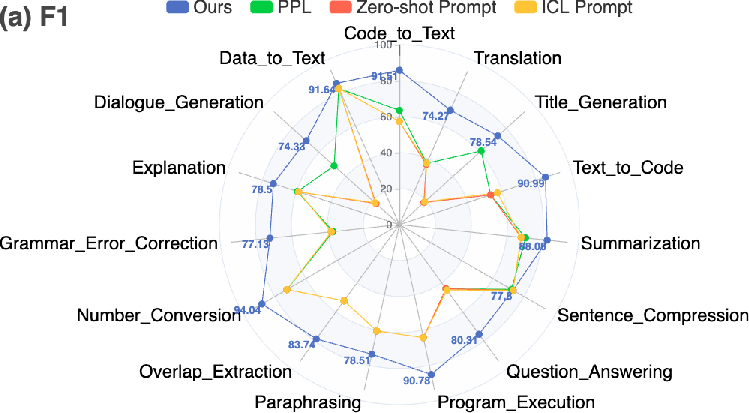
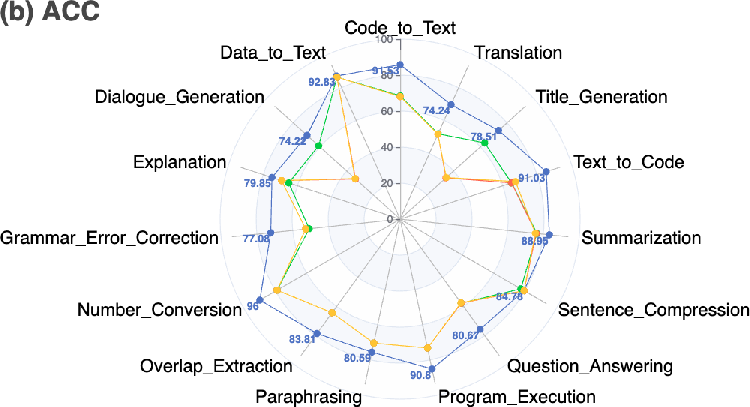
Figure 3: Automatic evaluation results for our method and baselines including Perplexity (PPL), Zero-shot Prompt, and In Context Learning (ICL) Prompt.
Furthermore, the study highlights the significance of deeper activation layers in improving estimation precision (Figure 4) and demonstrates the efficiency of the proposed estimator compared to perplexity-based and prompt-based methods.
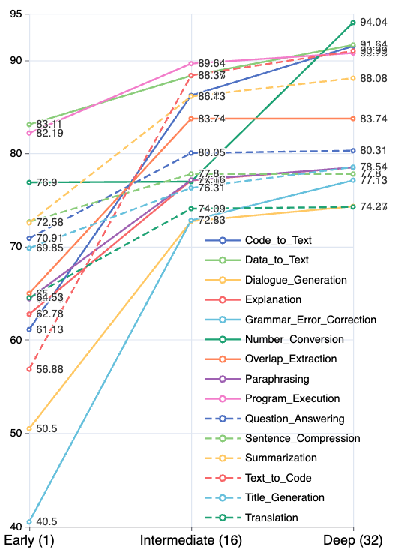
Figure 4: F1 scores of Internal-State from Different Layers for Hallucination Estimation.
Implications and Future Work
The findings suggest that modeling LLMs' introspective ability could enhance their reliability and user trust in AI systems. Future research could focus on generalizing these techniques across more varied models and task categories, as well as integrating these insights into practical applications like retrieval-augmented generation.
Conclusion
The paper provides compelling evidence that LLMs possess internal mechanisms capable of recognizing hallucination risk before response generation. With potential applications ranging from improving AI assistants to deploying more reliable AI systems, this research opens avenues for future exploration into LLMs' self-awareness capabilities and their integration into robust AI designs.

