- The paper introduces topological representational similarity analysis (tRSA) to integrate geometric and topological features for robust neural representation analysis.
- It employs geo-topological transforms (GT) that compress extreme distances while preserving informative intermediates, enhancing model identification in varied noise regimes.
- Empirical evaluations demonstrate optimal region and layer identification in both fMRI and deep network models, validating the framework’s cross-domain utility.
Topological and Geometric Characterization of Neural Representations
Introduction
The paper "The Topology and Geometry of Neural Representations" (2309.11028) systematically develops a framework for characterizing neural population representations using both geometric and topological descriptors, advancing the classical representational similarity analysis (RSA) paradigm. The authors address a critical challenge: conventional RSA, which relies on representational dissimilarity matrices (RDMs), is sensitive to measurement noise and interindividual idiosyncrasies that can obfuscate computationally relevant distinctions in brain and model representations. This work proposes topological representational similarity analysis (tRSA), leveraging a family of geo-topological summary statistics (RGTMs and RGDMs) that interpolate between geometric and topological extremes, thereby enhancing robustness and interpretability in both neuroscience and artificial intelligence contexts.
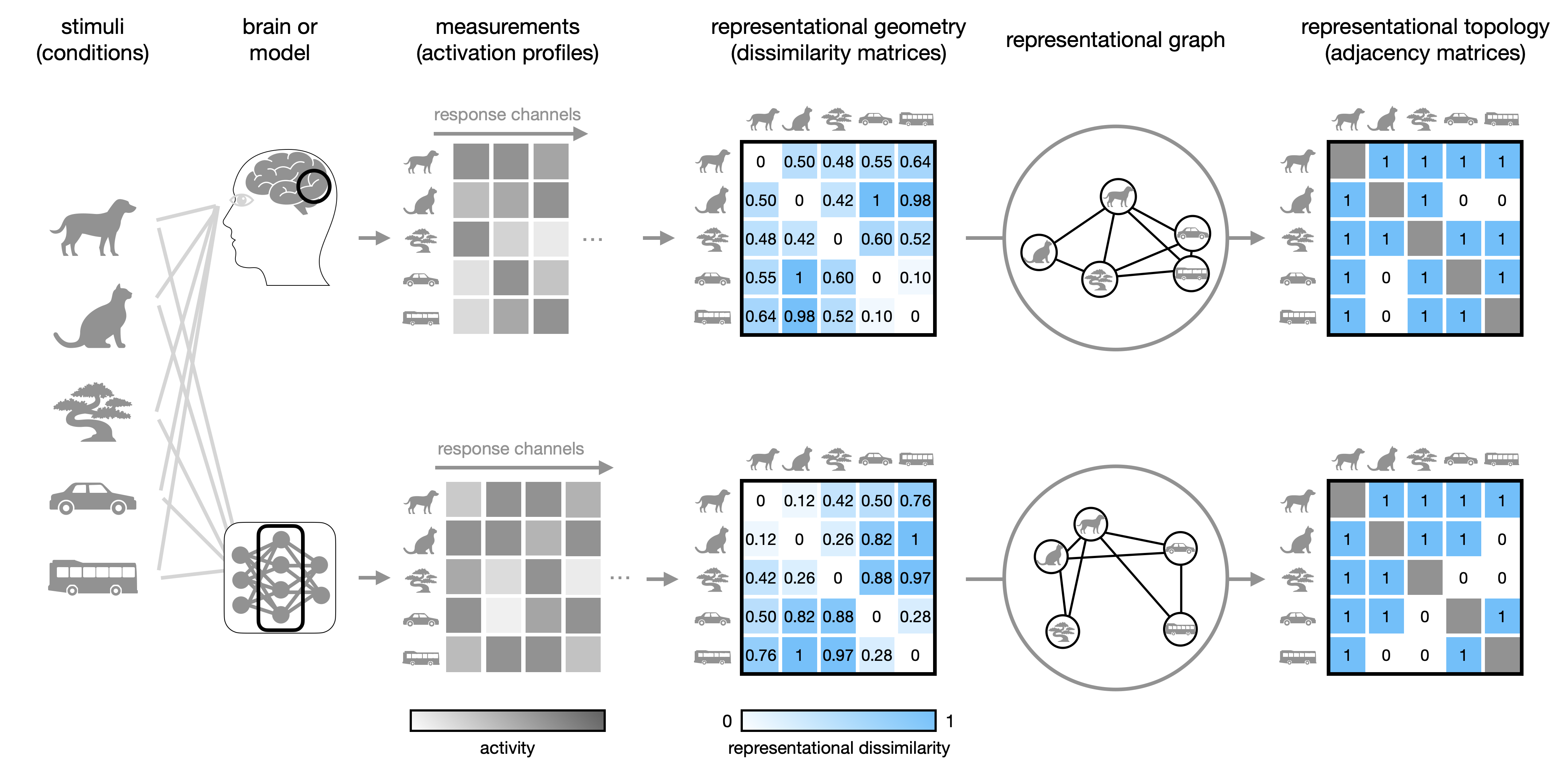
Figure 1: Comparison of geometric (RDM) and topological (adjacency matrix) summary statistics used for cross-system representational analysis.
Geo-Topological Descriptors: Theory and Construction
The core contribution is the definition of geo-topological transforms (GT), which are piecewise monotonic nonlinear functions that compress variation in the extremes of the representational distance spectrum. The transform is parameterized by a lower threshold l and an upper threshold u. Distances below l are collapsed, those above u are saturated, and intermediate distances are linearly mapped, forming a family of RGTMs. This parameterization enables tailored sensitivity to either geometric or topological features, or hybrid configurations, all subsumed within the RGTM framework.

Figure 2: Diagrammatic intuition for the geo-topological transform, showing the signal-to-noise benefits of compressing extreme distances while retaining informative intermediates.
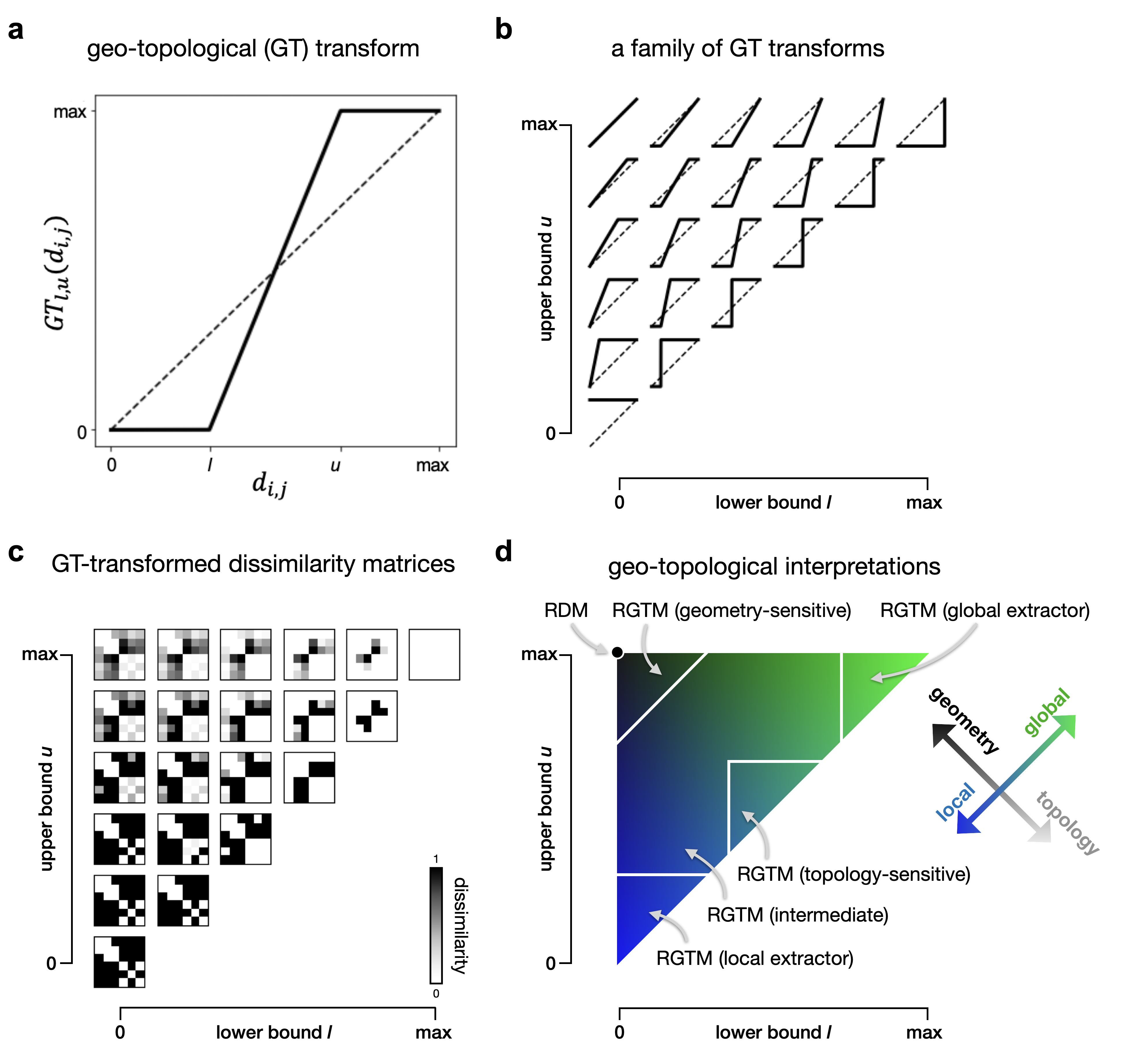
Figure 3: Formalization of the GT transform family; visual mapping of the RGTM zones—including geometry-sensitive, topology-sensitive, local, global, and intermediate extractors—as a function of l and u.
Additionally, the authors extend this framework by proposing RGDMs, which estimate geodesic distances within the representational space, grounded in graph theory. This approach captures not only geometric proximity but also the underlying manifold structure, accommodating complex network topologies.
Proof of Concept: Discrimination Between Topological and Geometric Features
To validate the new descriptors, idealized neural representations were constructed with distinct geometric and topological features (e.g., self-intersecting or non-intersecting closed curves). Results demonstrate that classical RDMs are predominantly sensitive to global geometric distinctions (bending), whereas RGTMs and RGDMs effectively highlight topological invariants such as the presence of holes or shortcuts, as evidenced by their prominence in MDS analyses.

Figure 4: Comparative sensitivity of RDMs, RGTMs, and RGDMs to geometric and topological features in hypothetical neural representations.
Empirical Results: Robust Identification in Brain and Deep Network Models
Human fMRI Data
The effectiveness of geo-topological descriptors was empirically assessed using fMRI data from eight ventral-stream visual cortical regions in 24 subjects. Region identification accuracy (RIA) was maximized for intermediate threshold settings (l=0.40, u=0.65), indicating that substantial distance compression does not compromise model-selection performance. Geometry-sensitive and topology-sensitive RGTMs matched in identification accuracy, but local extractors were suboptimal, reflecting the necessity of balancing local and global information.
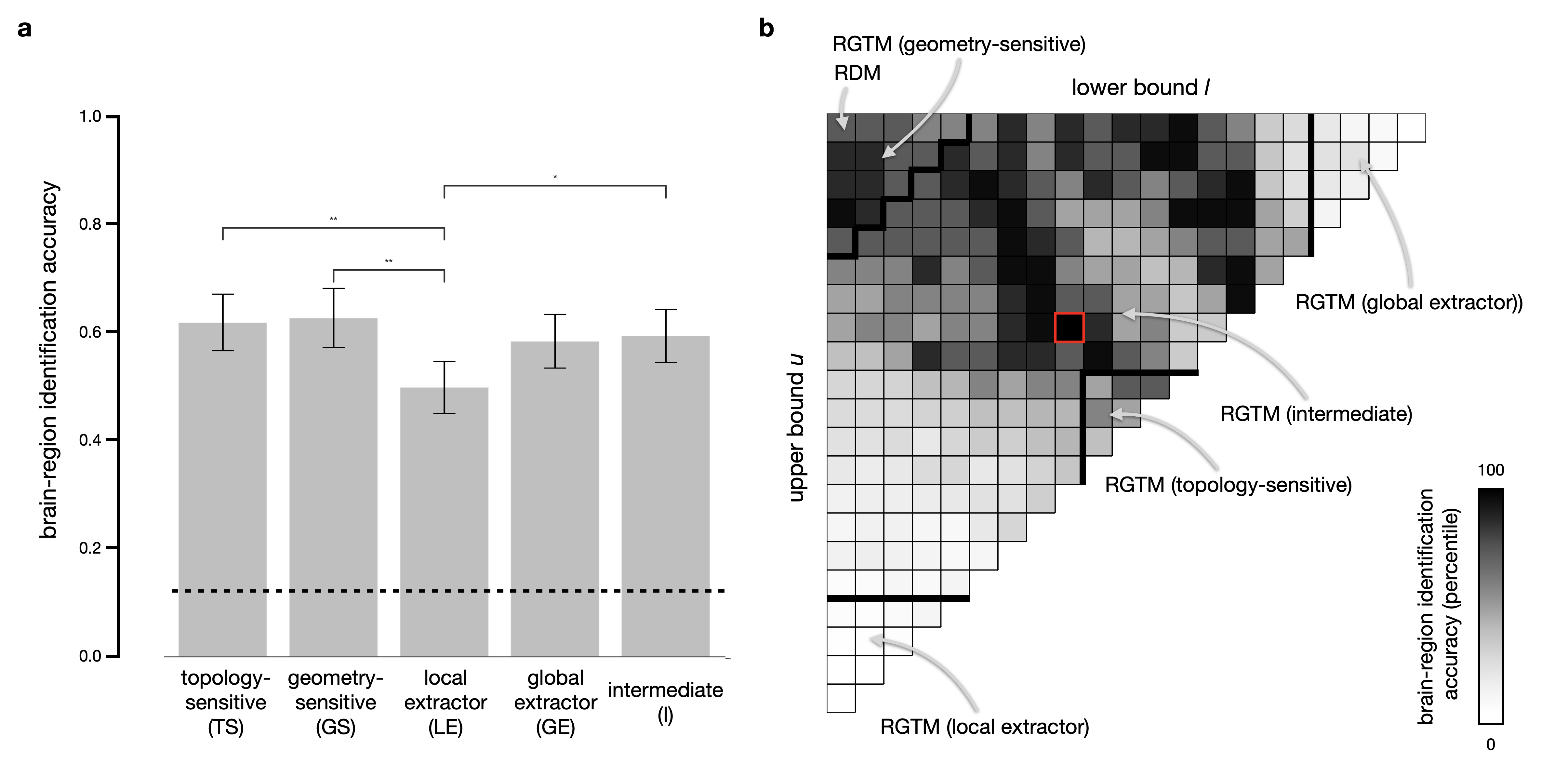
Figure 5: Region identification accuracy across RGTM family zones; optimal RIA achieved for intermediate transforms.
Deep Neural Networks
Analogous analyses were conducted on 10 instances of the All Convolutional Neural Net architecture. Layer identification accuracy (LIA) depended on the noise regime: under increasing Gaussian noise, optimal settings shifted toward geometry-sensitive transforms, whereas in low-noise environments, compression of extremes yielded minimal performance loss, confirming redundancy in distance information.
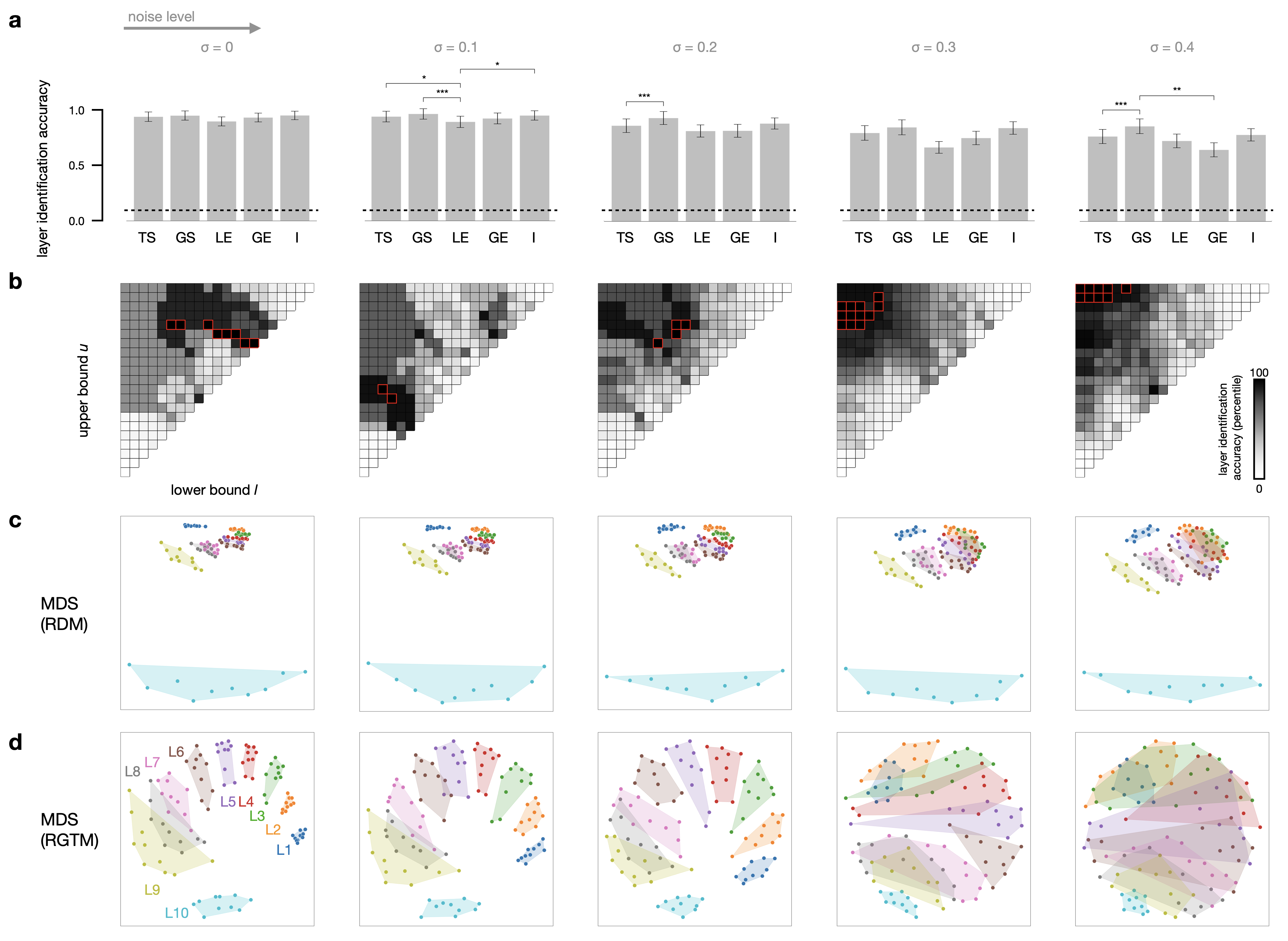
Figure 6: Layer identification accuracy across noise regimes and GT zones in deep networks; MDS analyses illustrate improved layer separation with geo-topological transforms.
Implications and Future Directions
Theoretical implications are substantive—geo-topological descriptors enable robust cross-individual and cross-instance comparison in both biological and artificial networks, isolating computationally relevant signatures by abstracting away nuisance variability. Practically, tRSA offers enhanced reliability in brain-region identification across subjects and facilitates principled layer adjudication in neural network model variants.
For hypothesis testing, tRSA is indispensable for topological questions (e.g., whether a representation conforms to a toroidal or spherical topology). Geometric hypotheses remain compatible with conventional RSA, but tRSA reveals the extent to which topology, rather than geometry per se, underpins functional distinctions among neural populations. The method is flexible across data modalities (fMRI, EEG, MEG, invasive electrophysiology) and is immediately compatible with modern RSA inference toolkits.
There is no evidence that tRSA universally outperforms classical RSA in model adjudication, but its equivalence at substantially reduced information cost and its critical role in topological hypothesis testing merit broad adoption, especially as neuroscientific and AI models become more complex and heterogeneous.
Conclusion
The paper establishes a rigorous, parameterized framework for geo-topological characterization of neural representations, augmenting conventional RSA with robust, noise-resistant, and theoretically flexible summary statistics. Geo-topological descriptors unify geometric and topological analyses in a continuum, revealing computational invariants that transcend idiosyncratic details in both biological and artificial systems. Future advances should explore generalizability across tasks, modalities, and architectures, and refine theoretical links between topological invariants and underlying neural codes.