- The paper demonstrates that integrating AI with human expertise enhances threat detection and incident response for modern cybersecurity challenges.
- Using data-driven modeling, clear patterns in digital threats are identified, enabling proactive defense strategies and predictive analytics.
- The study evaluates practical applications in critical infrastructures, smart cities, and IoT networks while addressing challenges like data quality and privacy.
Data-Driven Intelligence: A Position in Cybersecurity
The paper "Data-Driven Intelligence can Revolutionize Today's Cybersecurity World: A Position Paper" (2308.05126) examines the application of data-driven intelligence in cybersecurity, advocating for using AI and machine learning to enhance cybersecurity defenses through automation and human assistance.
Introduction to Data-Driven Intelligence in Cybersecurity
In an increasingly interconnected world, cybersecurity challenges have evolved as digital threats become more sophisticated. The paper posits that traditional security frameworks, often intuitive and reactive, fail to adequately counter these dynamic threats and emphasizes transitioning toward data-driven intelligence. Data-driven intelligence, leveraging AI and machine learning, offers capabilities in threat detection and incident response, enhancing operational efficiency and augmenting human decision-making through predictive analytics.
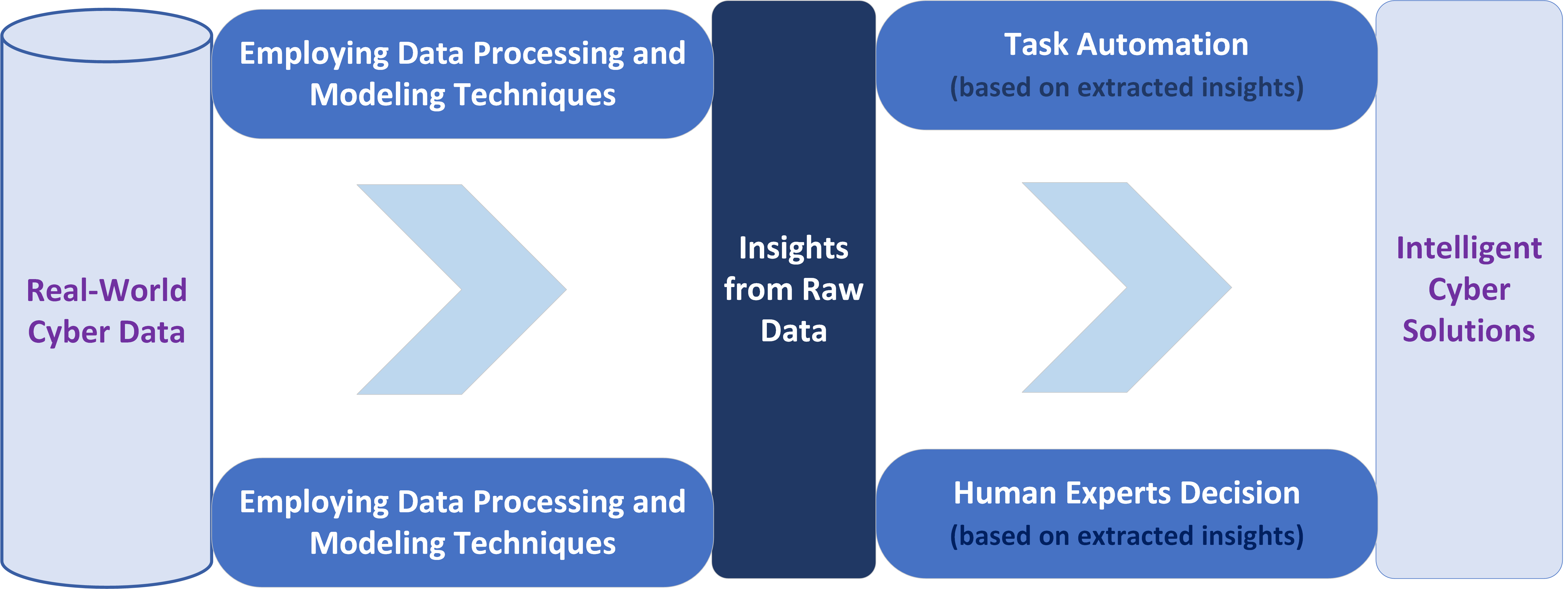
Figure 1: An illustration highlighting the potential of data-driven intelligence for both automation and assisting human experts in the context of cybersecurity.
Potential Applications of Data-Driven Intelligence
Automation and Human Expertise Augmentation
Data-driven intelligence facilitates large-scale task automation crucial for cybersecurity operations like log analysis and anomaly detection, thereby alleviating human workload and minimizing errors. Furthermore, it strengthens human analytical capabilities by providing evidence-based recommendations and retaining organizational knowledge for decision-making.
Modeling and Insights
Data-driven modeling relies on analyzing patterns, trends, and correlations within diverse datasets, which are crucial for building proactive cybersecurity strategies. This includes inputs such as network logs and user behavior data, enabling organizations to develop adaptive defense systems better equipped to handle dynamic cyber threats.
Applications in Real-World Scenarios
The paper highlights several domains where data-driven intelligence can be particularly impactful:
- Critical Infrastructure: As essential systems like energy and healthcare increasingly integrate digital components, data-driven intelligence enhances monitoring, prediction, and response capabilities against cyber threats.
- Digital Twin: Virtual replicas of physical processes benefit from real-time monitoring and anomaly detection capabilities offered by data-driven frameworks.
- Smart Cities: IoT and interconnected systems in urban environments require sophisticated data analysis for security and efficient threat response.
- IoT Networks: As IoT devices proliferate, proactive data analysis mitigates potential vulnerabilities within these expansive networks.
- Industrial Control Systems: The robust monitoring and security of ICS/OT environments are crucial, as these systems often are critical targets for cyber threats.
Challenges and Future Directions
While promising, several challenges persist:
- Data Quality and Availability: Ensuring the reliability and comprehensiveness of cybersecurity datasets remains a challenge.
- Algorithm Transparency: Developing explainable AI systems to ensure the interpretability of automated decision-making.
- Privacy Concerns: Protecting sensitive information while utilizing data-driven techniques is paramount.
- Adversarial Investigations: Countermeasures against data poisoning and adversarial attacks need to be enhanced to fortify systems.
The paper suggests that future research should focus on overcoming these barriers to optimally leverage data-driven intelligence in cybersecurity.
Conclusion
The paper outlines the transformative potential of data-driven intelligence in cybersecurity, emphasizing its role in task automation and expert assistance. While challenges exist, the paper advocates for a balanced approach integrating human expertise with advanced data-driven models to design robust and adaptive cybersecurity strategies. Continued research and development are necessary to address the challenges and fully realize the benefits of data-driven intelligence. By fostering a proactive cybersecurity posture, organizations can significantly mitigate risks and enhance their resilience against evolving cyber threats.
Overall, the synergy between human experts and data-driven intelligence marks a pivotal advancement in cybersecurity, necessitating strategic implementation and ongoing refinement to adapt to the fast-changing digital landscape.

