- The paper presents a novel GAN-based framework that employs an encoder-decoder-encoder architecture for effective semi-supervised anomaly detection.
- The methodology utilizes adversarial training and latent space mapping to model normal data distributions and detect unseen anomalies.
- Experimental results show significant AUC improvements over conventional methods on benchmarks like MNIST, CIFAR, and security datasets.
GANomaly: An Expert Overview
Introduction
The paper "GANomaly: Semi-Supervised Anomaly Detection via Adversarial Training" introduces an innovative model aimed at addressing the classical problem of anomaly detection, particularly within datasets heavily biased towards the normal class. The model utilizes a conditional generative adversarial network (GAN) framework, employing an encoder-decoder-encoder architecture to learn and identify anomalies. This approach allows for detection of unknown anomalies by training only on samples considered normal, a key challenge in real-world scenarios such as X-ray security screening.
Context and Motivation
Anomaly detection is critical in many fields, from security and surveillance to medical diagnostics and fraud detection. Traditional methods often rely on supervised learning which requires extensive labeled datasets, not always feasible for anomalies due to their rarity. The GANomaly approach leverages semi-supervised learning, using adversarial training to capture data distributions of normal samples and detect deviations. This capability is particularly relevant in security contexts where novel threats can emerge unexpectedly, challenging existing systems to adapt without retraining on new data.
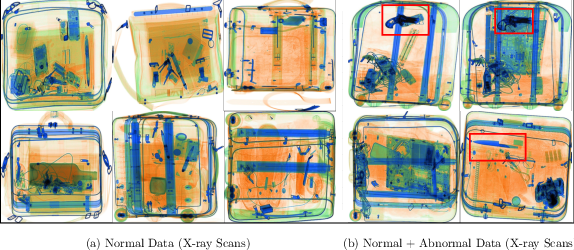
Figure 1: Overview of our anomaly detection approach within the context of an X-ray security screening problem.
The research builds upon existing GAN variations and anomaly detection frameworks. Previous works like AnoGAN and BiGAN have set precedents for using GANs in anomaly detection, focusing on mapping latent spaces to image spaces. However, these methods often involve computationally intensive processes or two-stage training setups. GANomaly differentiates itself by offering a more efficient architecture that combines adversarial autoencoding with simultaneous image and latent space mapping, optimizing performance in both training and inference stages.
Methodology: GANomaly Framework
The GANomaly model integrates a three-part sub-network system within the adversarial training framework, consisting of a generator, an additional encoder, and a discriminator. The generator employs an encoder-decoder setup to map inputs to latent vectors and reconstruct outputs, aiming to make the output indistinguishable from genuine inputs to the discriminator. The second encoder further compresses the generated output, and minimization of vector distances between original and generated images in latent space aids in robust anomaly detection.
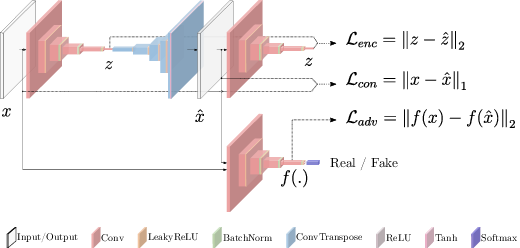
Figure 2: Pipeline of the proposed approach for anomaly detection.
Experimental Setup and Results
Experiments conducted across datasets including MNIST, CIFAR, and dedicated X-ray screening datasets demonstrate the model's proficiency. Notably, GANomaly outperforms contemporary models like AnoGAN and EGBAD in standard performance metrics, specifically AUC for anomaly detection tasks. The MNIST results, shown in Figure 3, highlight consistent superiority in detecting anomalies compared to baselines.
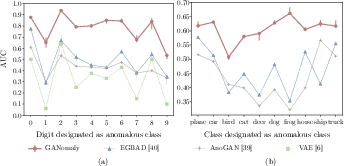
Figure 3: Results for MNIST and CIFAR datasets. Variations due to the use of 3 different random seeds are depicted via error bars.
Implications and Future Directions
The GANomaly framework presents significant implications for real-world applications requiring adaptive, efficient anomaly detection solutions. The model's ability to generalize to unseen anomalies without retraining on labeled anomalous data offers a substantial advantage in dynamic threat environments such as aviation security. Future work should explore integrating advanced GAN training techniques to further stabilize and enhance performance, potentially broadening the applicability to more complex, multi-modal datasets.
Conclusion
GANomaly introduces a sophisticated yet efficient approach to anomaly detection, leveraging adversarial training and innovative architectural design to excel across a range of tasks. By combining robust learning with computational efficiency, it sets a new benchmark for future exploration and application in anomaly detection frameworks.
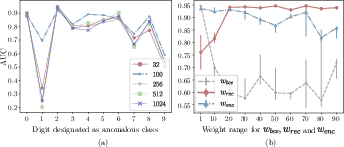
Figure 4: Overall performance of the model based on varying size of the latent vector z and impact of weighting the losses.

